Leaving a career in publishing to study for a Masters in Ceramics at Wolverhampton University, Laura Murphy now designs and makes delicate, translucent vessels and sculptural botanically-themed organic structures from her studio in South Oxfordshire, using traditional white parian porcelain. Working with a limited palette of striking colours against the ice-white clay her ceramics feature crisp, fluid patterns inspired by botanical structures and movement across rural landscapes such as a swallow’s flight, or a breeze through a wheat field. Laura has a love for all wildlife, from botanical to beetles, the observation of which informs her work.
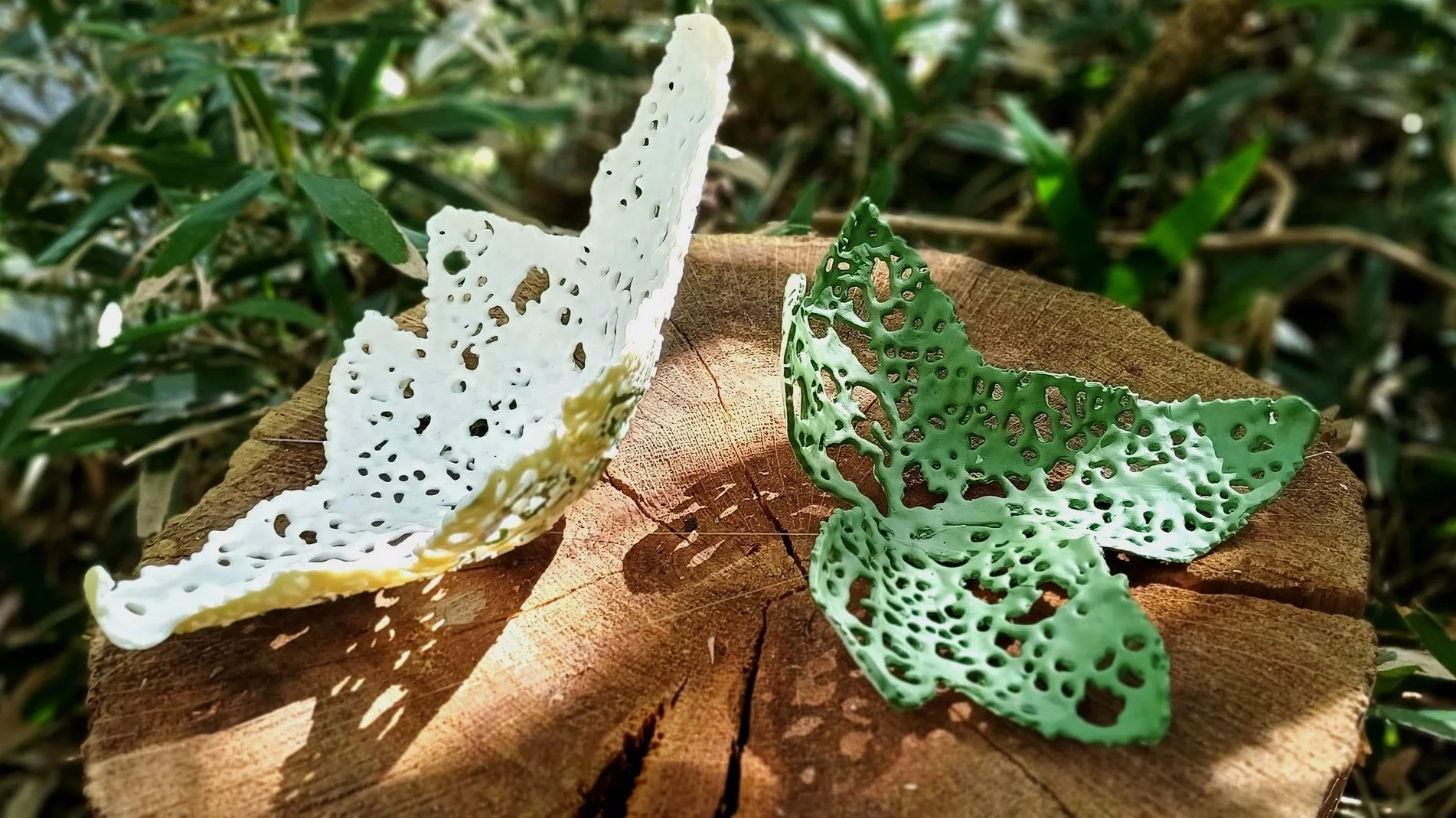
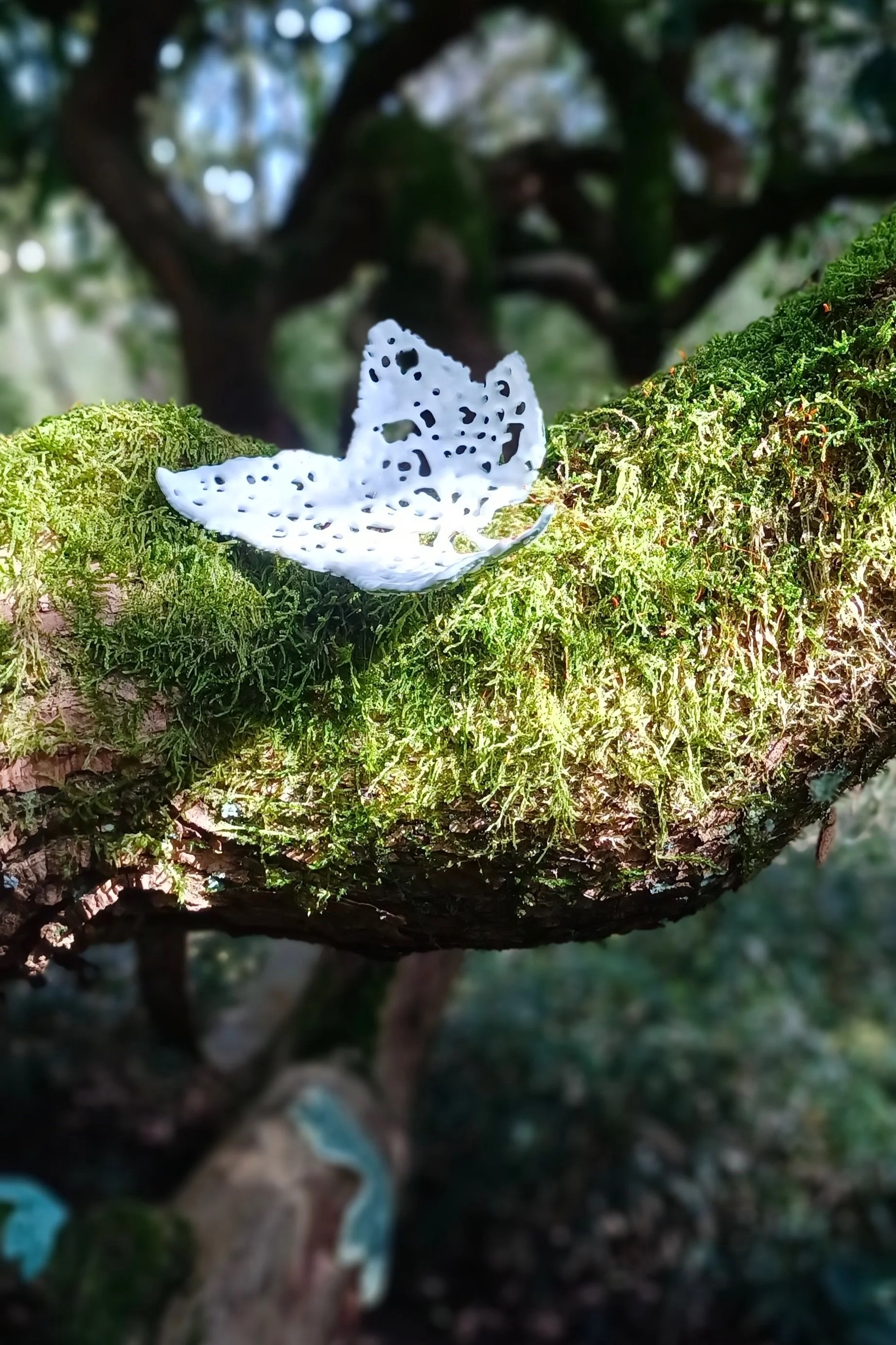
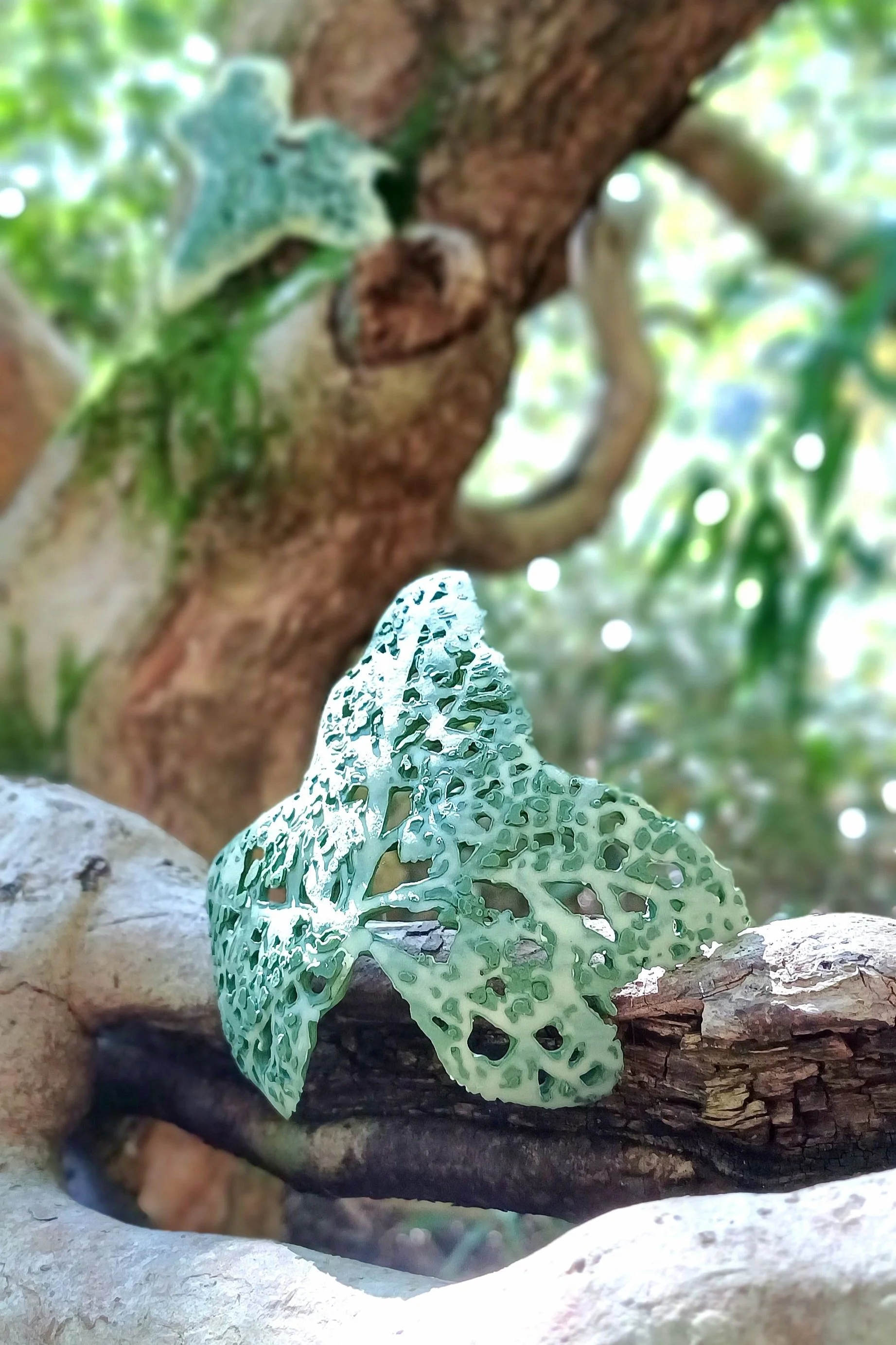
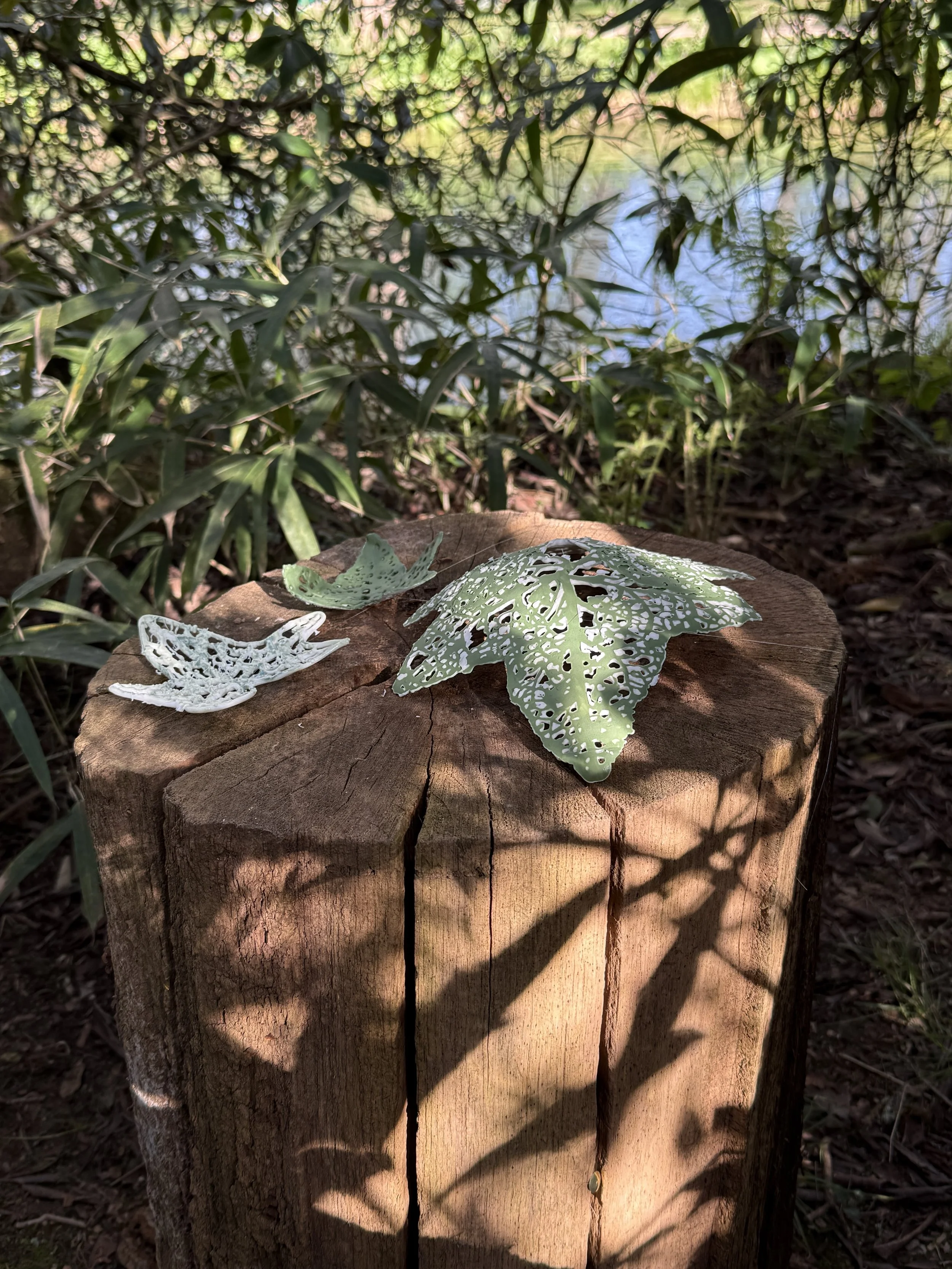
The sculptural Hedera Ceramicus installation uses intricate porcelain sculptures of ivy leaves at varying sizes, celebrating the complex organic structure within each individual leaf. The porcelain leaves are positioned around the boughs of an aged rhododendron tree in a beautiful glade; the branches weave in and out of each other in a similar way to the growth pattern of ivy plants and create a mythical effect, like the ancient tree Yggdrasil from Norse mythology.
Ivy (latin name Hedera) is a much-misunderstood plant which provides essential habitat for small mammals and birds, keeping them warm in winter and cool in summer and offering nesting sites. It grows from the ground where it takes its nutrients and uses trees and buildings to wind its way up towards the light, giving it structure. The berries provide winter food for birds, and it flowers from September, offering pollinators like the Ivy Bee a vital source of nectar, ready for winter hibernation.
Find out more about ‘The Importance of Ivy’ from Hampshire and the Isle of Wight Wildlife Trust’s website here: https://www.hiwwt.org.uk/blog/hiwwt/importance-ivy
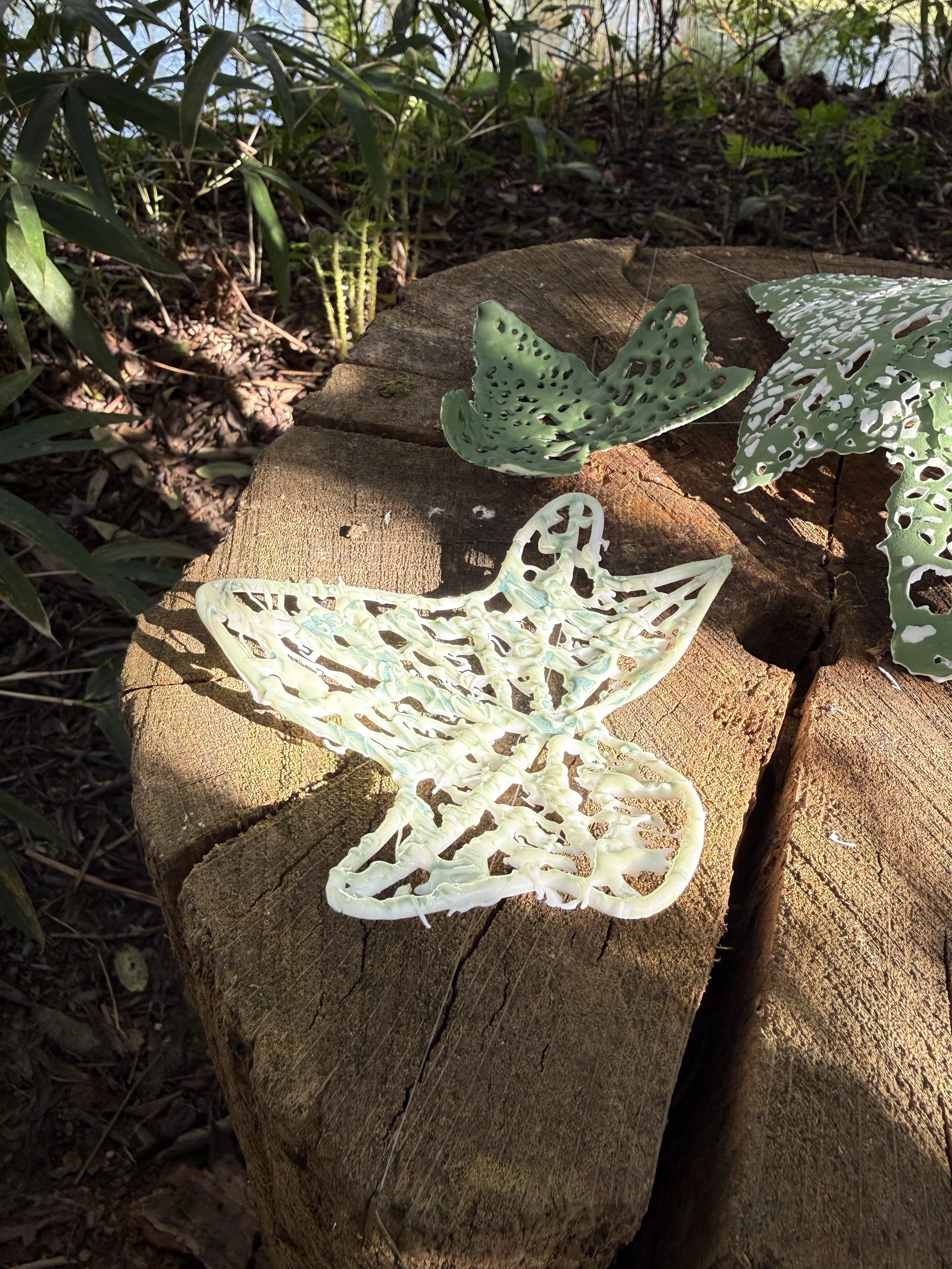

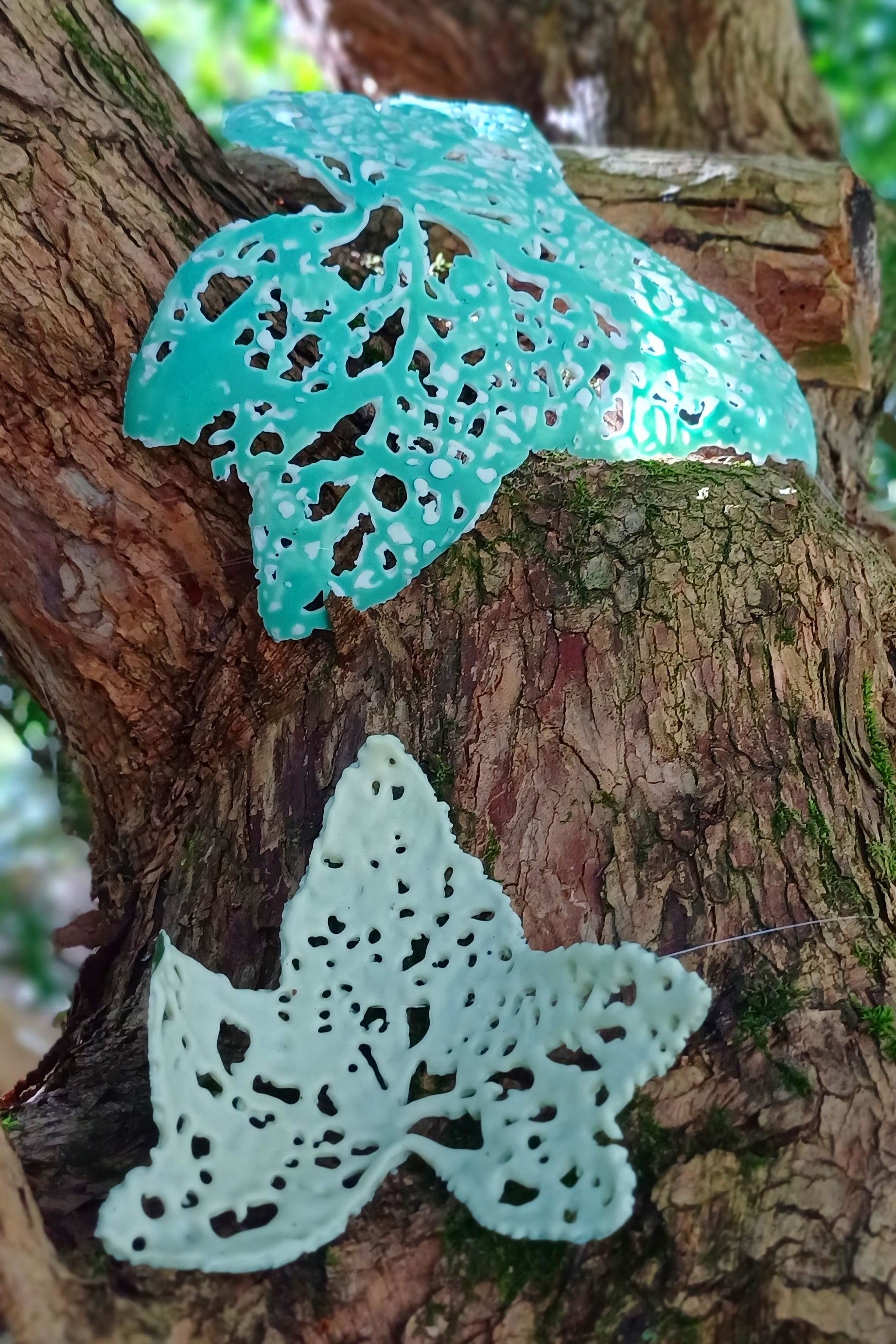
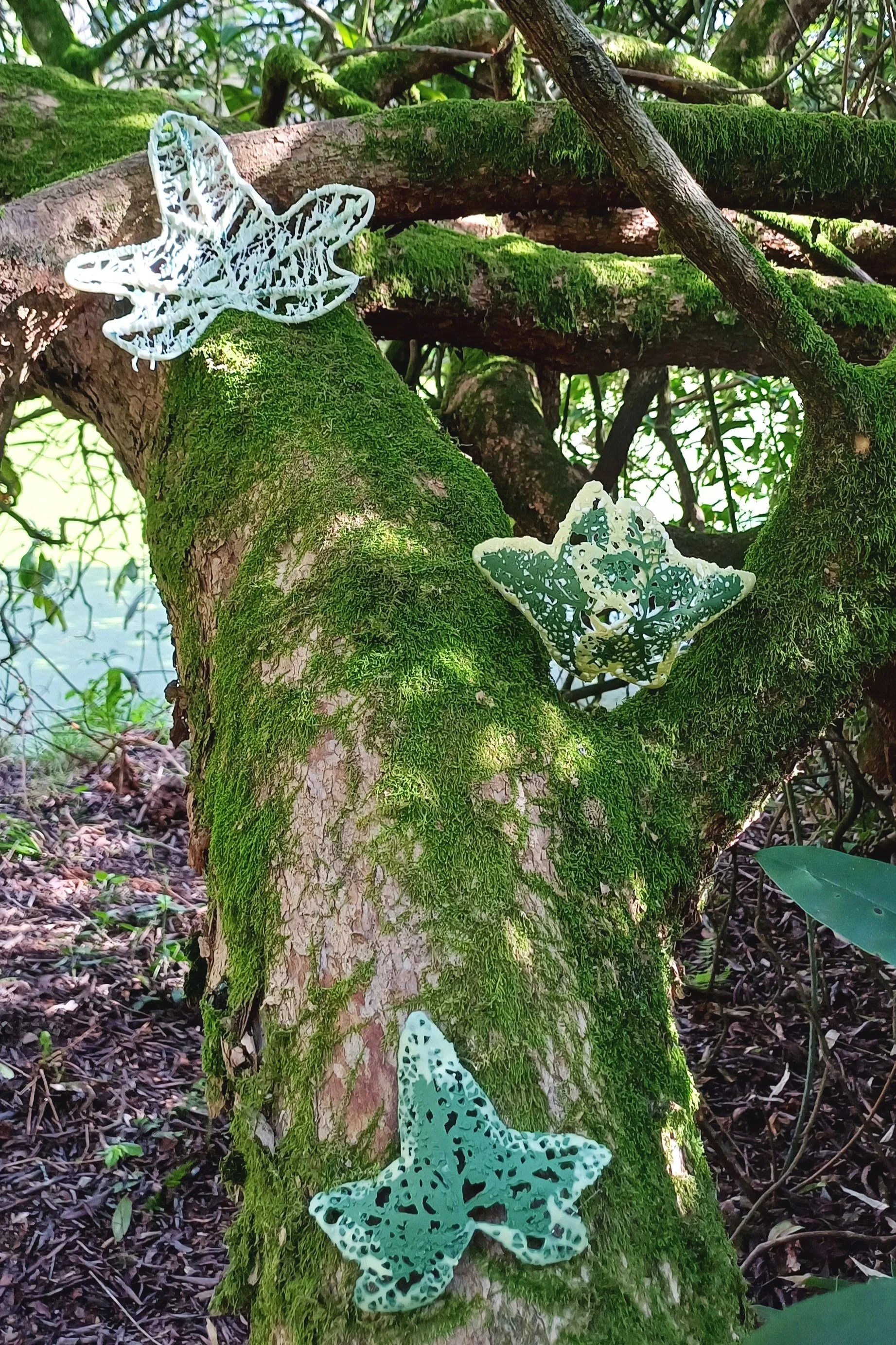
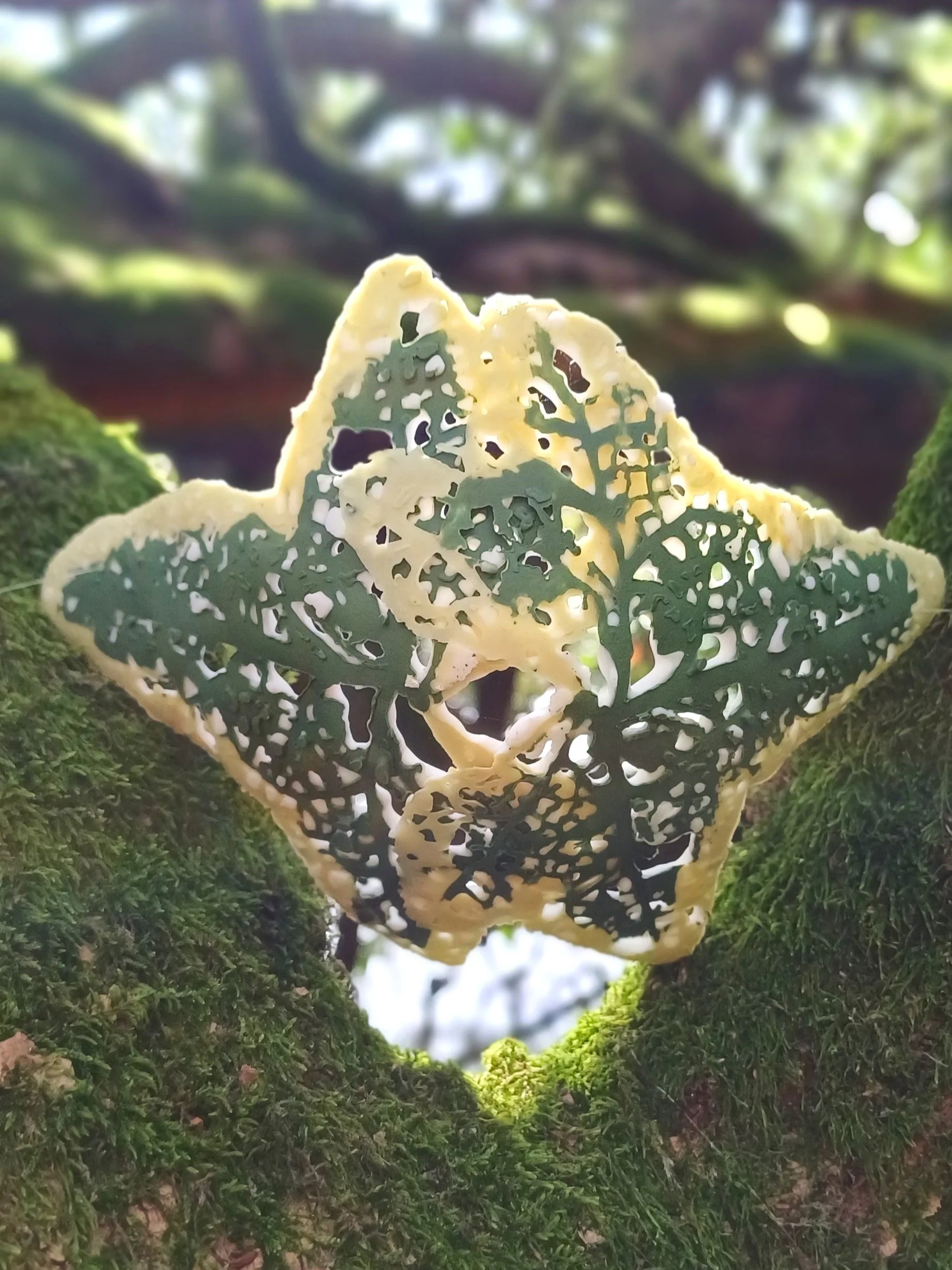
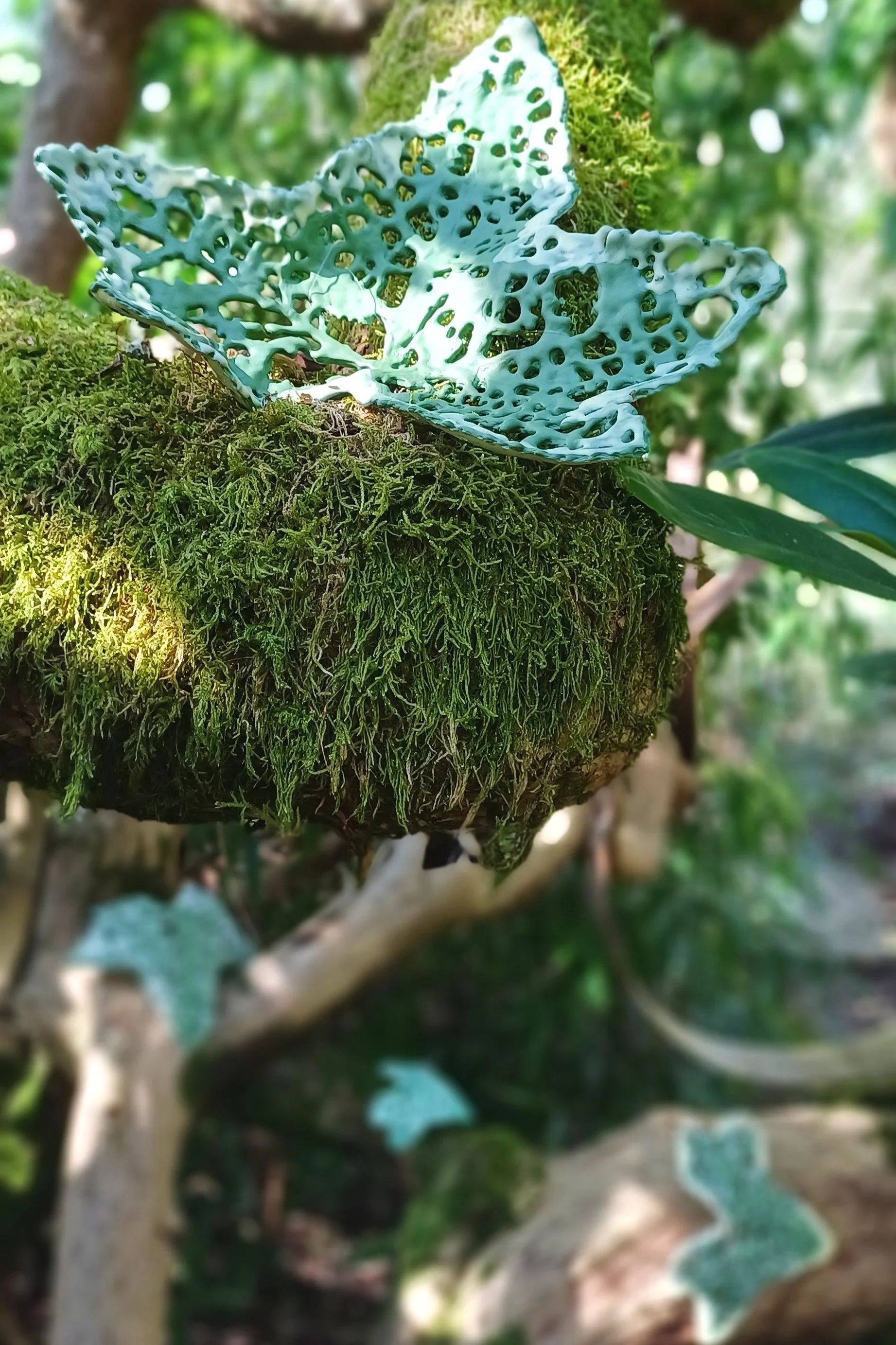
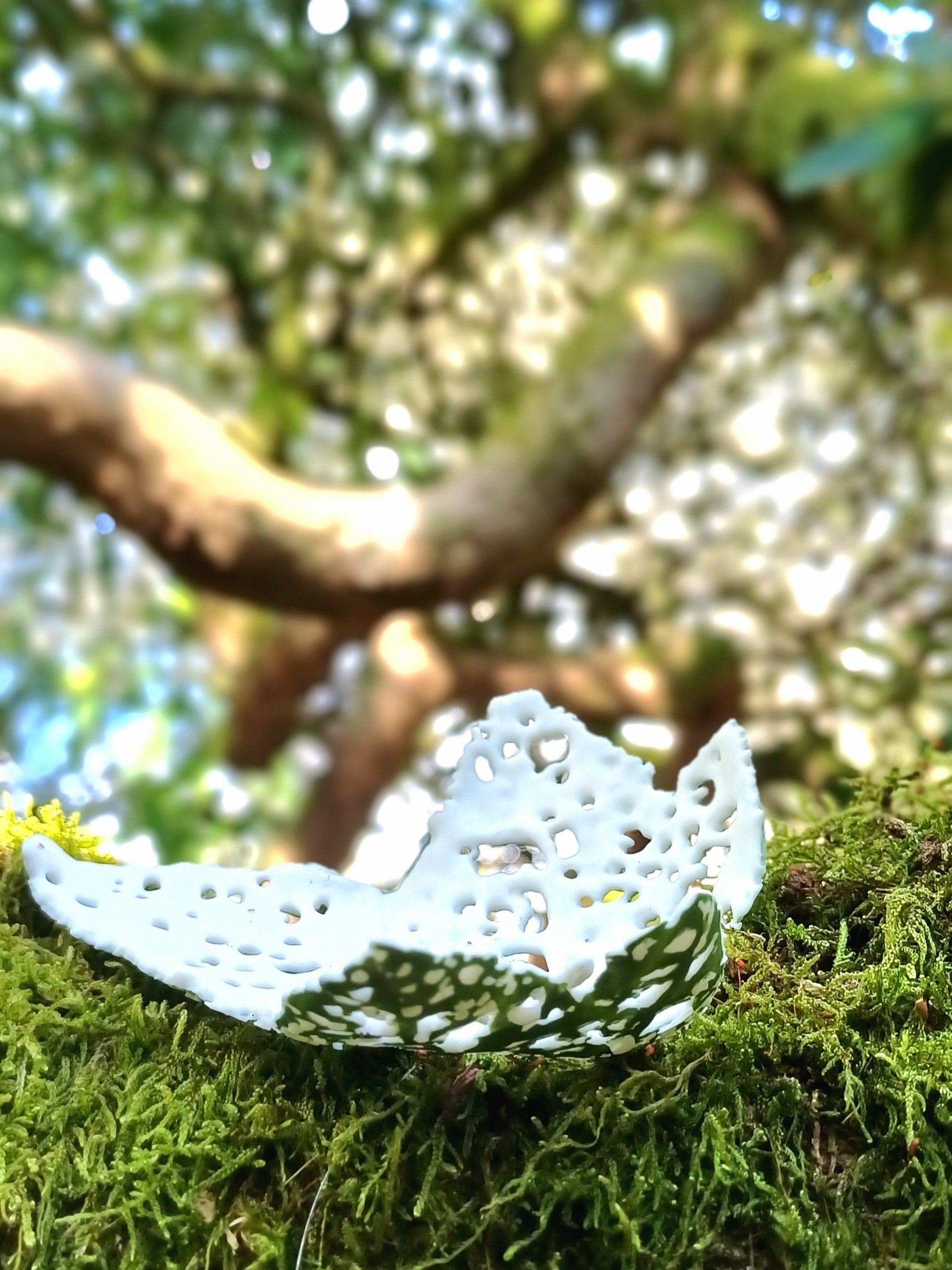
Outdoor Sculpture
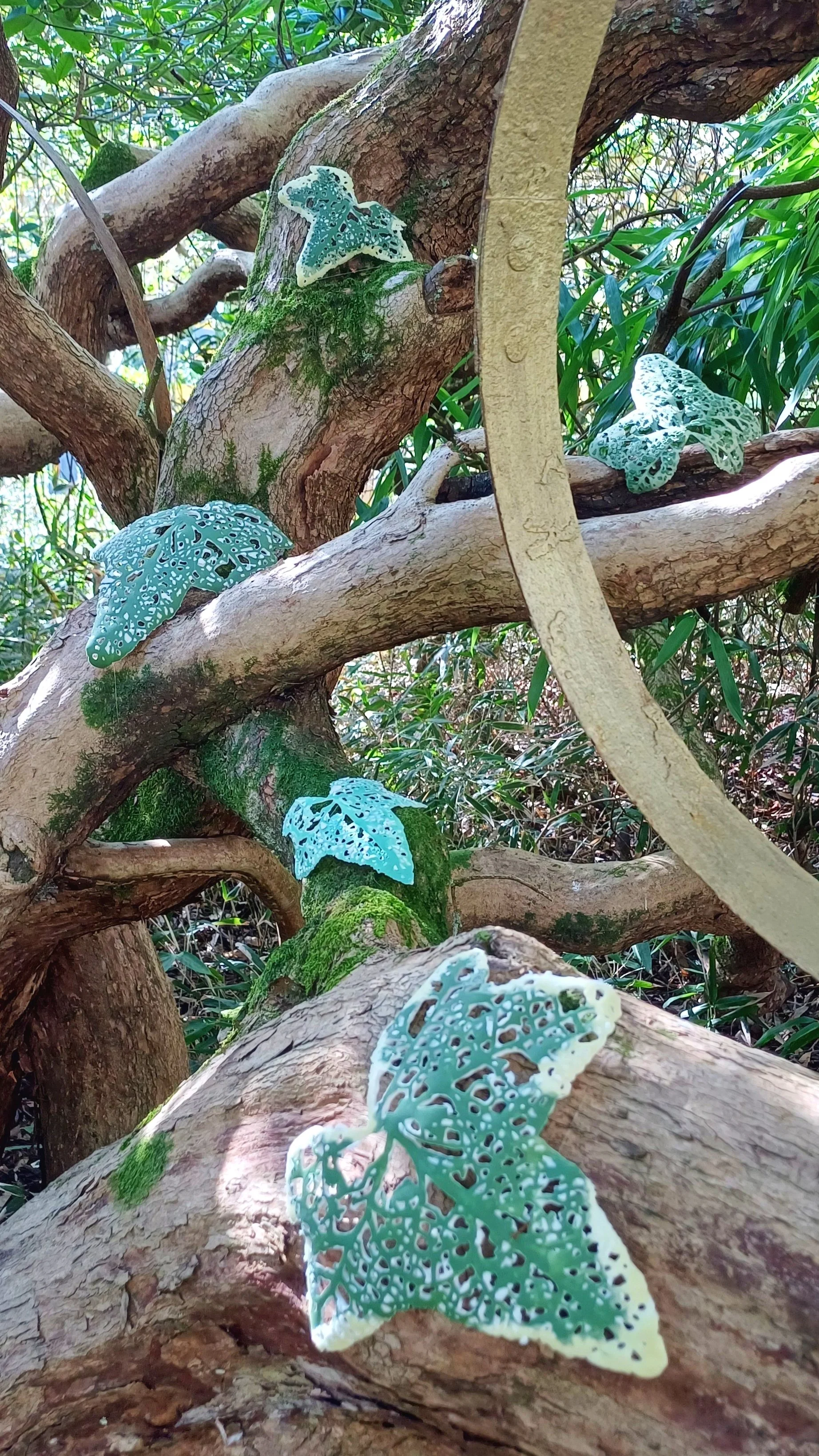
‘Hedera Ceramicus’
Porcelain
Variable sizes